

You take the stage. We hold the rest.
Five modules. Take all of them, take one. The core is always the event day, because that is where all the small things add up into how people feel.
We don't sell fixed packages. We look at the event, the venue and what you already have covered, then take only what is missing. Most clients start with the event day and add video from the second edition, once they see what it means to have something to sell the next one with. Some come the other way round, for the filming, and that is where we stop: we film where we also run the day, because otherwise we cannot answer for how it turns out.
- Before
Tickets, registration and check-in
You sell the tickets, people get them by email with a QR code, and we scan them at the door on the morning. You see everything as it happens, from the first day of sales to the last person through the door.
- Before
Planning and promotion
The part that happens months earlier and decides how many people actually walk into the room. Mistakes here are the cheapest to fix, if you catch them in time.
- In the room
Event day production
You have one job that day: to be present for the people you brought there. Our crew holds the rest, with the two of us in control: one at the tech desk while the stage is live, one on the floor watching everything that is not the stage.
- On screen
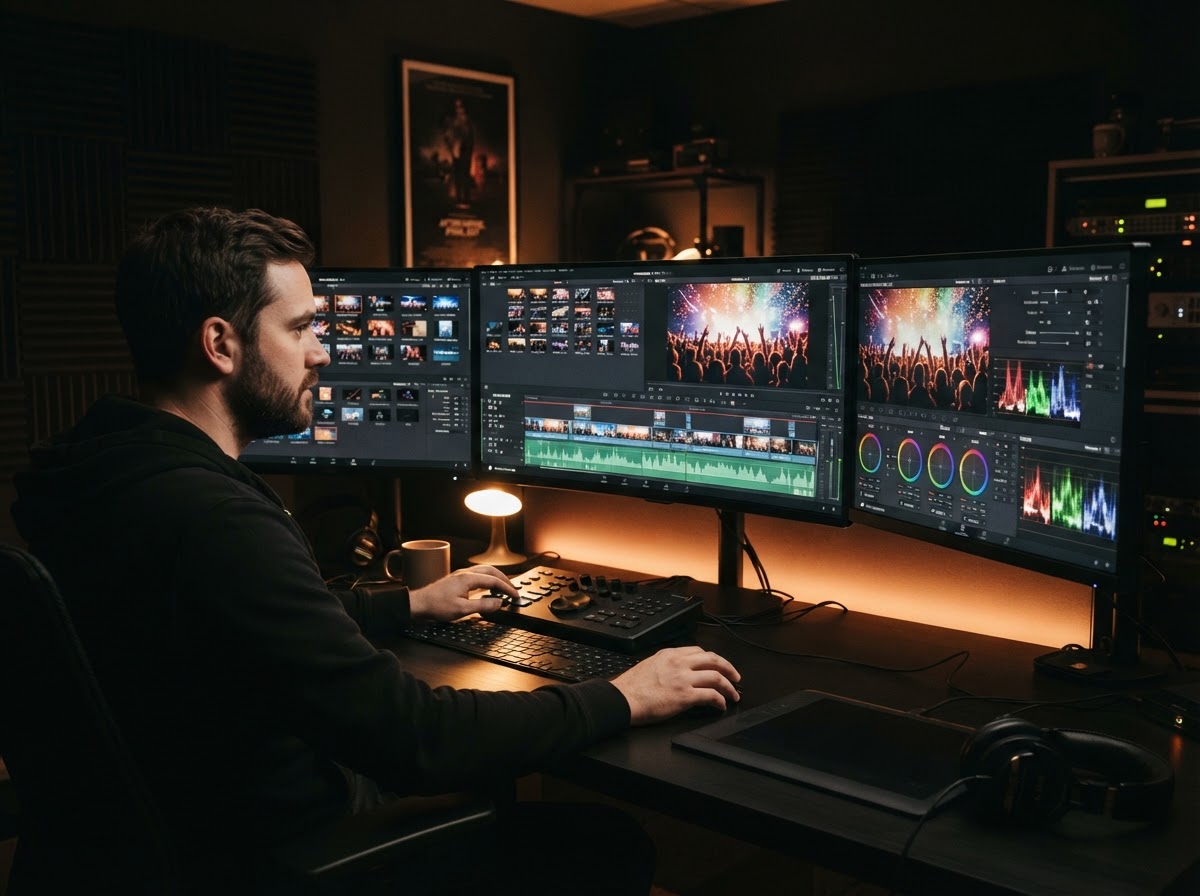
Instant aftermovie
The last thing people see before they leave should not be a note about parking. It should be their day, the way they lived it. We film and edit while the event is still running, then put it on screen while they are all still there, together.
- After
Video and materials
You spent months on this day and it lasted eight hours. What is left of it depends on what was filmed, and on what you decided in advance you wanted to do with the material.
If you already have a sound supplier or a video crew, we work alongside them. We don't ask for exclusivity and we don't turn down a project because we aren't taking all of it. We take on around six events a year, so asking early whether we are free on your date is a fair question.
How working together goes
An event does not run off a task list. It runs on a timeline that starts months out and ends a few days after the last person has left.
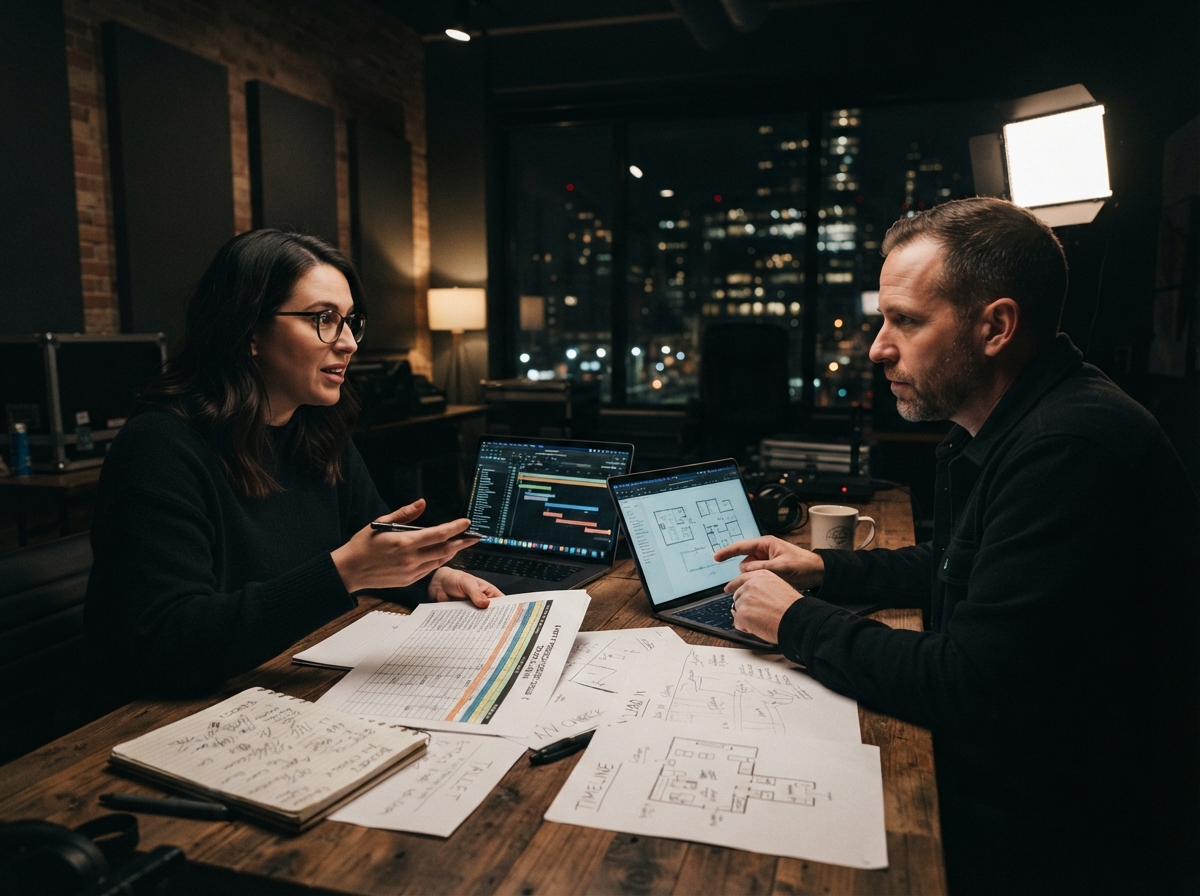 MONTHSBEFORE
Brief and direction
We agree what we deliver, what you cover, what the venue supplies. If ticketing is part of it, we build the system now, so you have as much selling time as possible. The technical plan comes out of the same conversation: complete if the venue is confirmed, with open variables if it is not yet.
- What we deliver and what stays with you
- Ticketing and registration, if it is in scope
- Technical plan and direction for the video
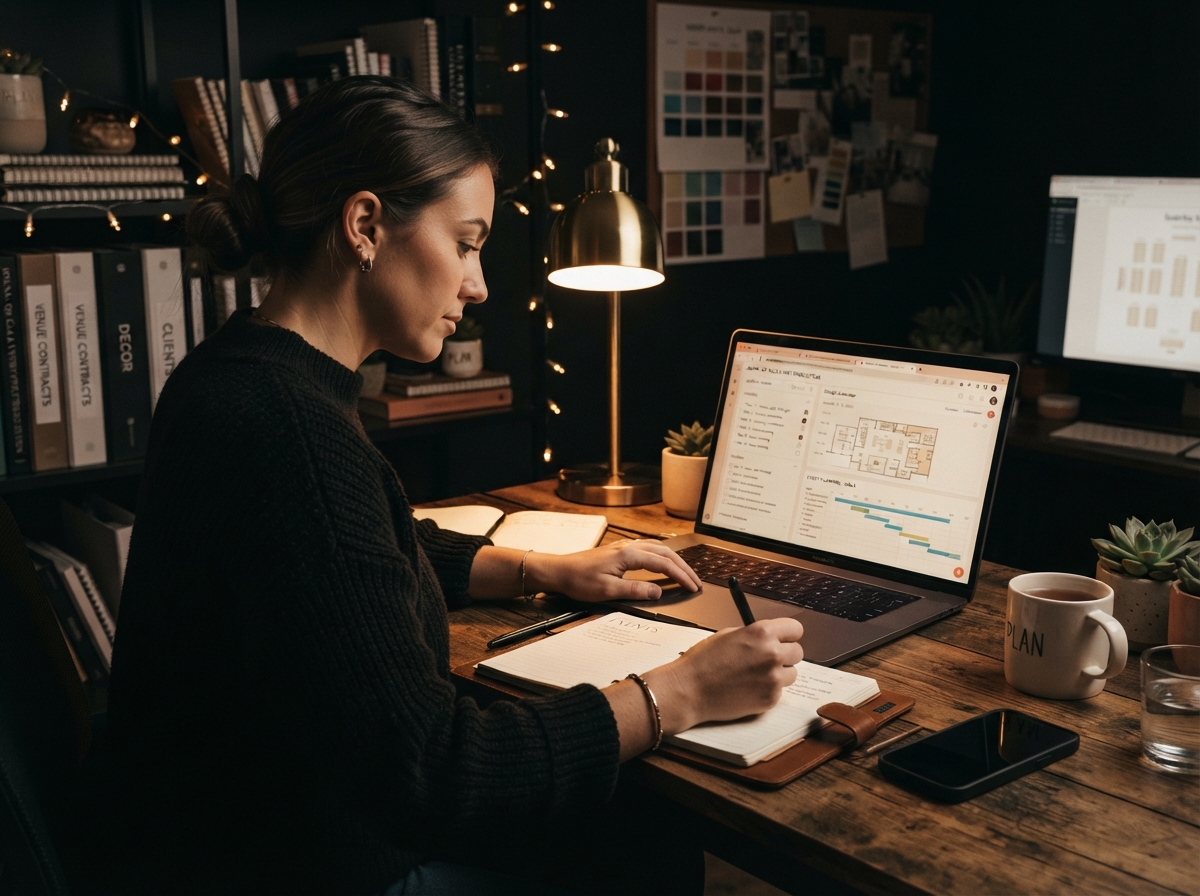 PROMO
PROMOCheckpoints
We meet regularly on whatever moves. Nothing waits for the final week, when there is no time left to fix it anyway.
- Agenda and speaker list
- Tickets sold and what that means for the room
- Decisions made along the way
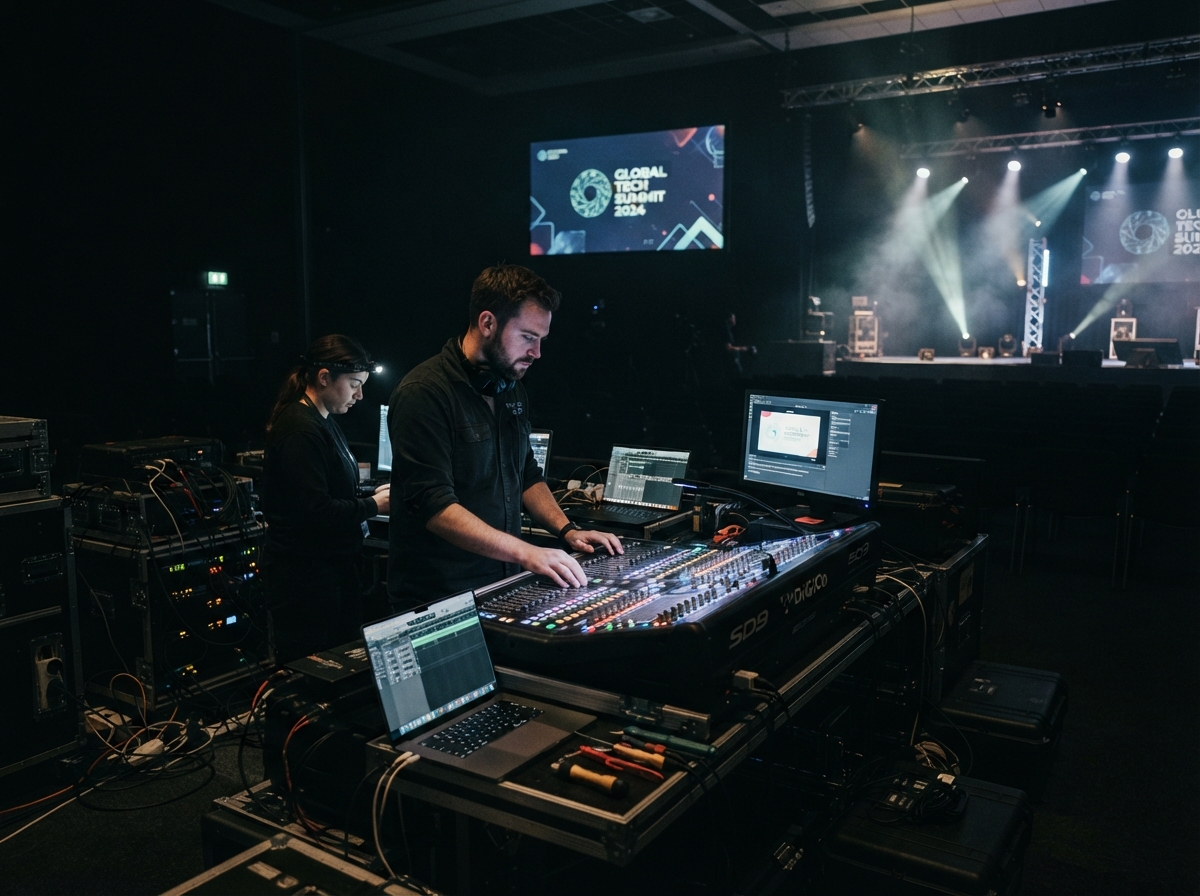 DAYBEFORE
In the room
Everything built and tested. Crew brief, speakers walk the stage, last details settled with no audience in the room.
- Sound, projection, tech desk
- Brief with the crew and the venue
- Speaker rehearsal
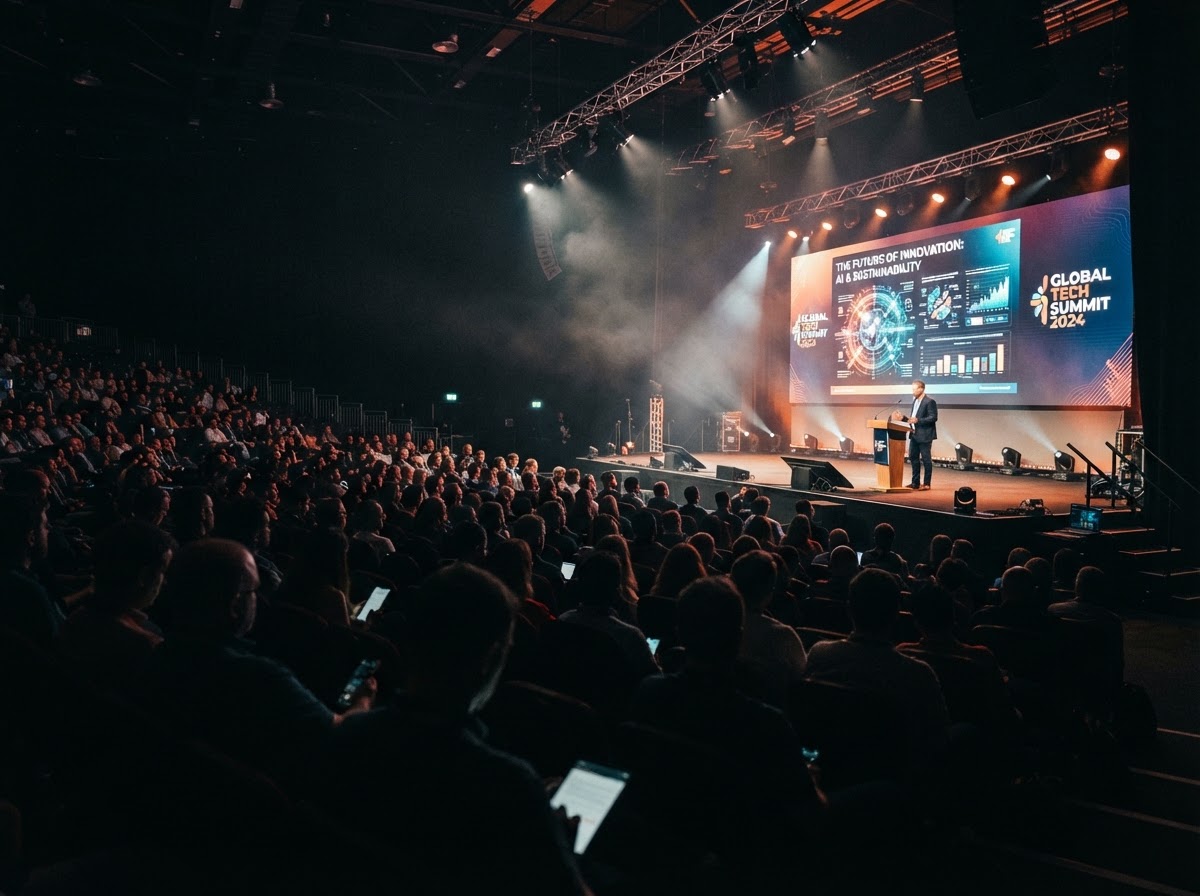 EVENTDAY
Direction
One at the tech desk, one on the floor. Schedule held to the minute, microphones live on time, music on the second, and you free.
- Live direction throughout the day
- Check-in, room flow and crew coordination
- Filming for the aftermovie
 AFTEREVENT
Debrief and handover
What worked, what did not, what changes next edition. Plus the video deliverables, if they are in the contract.
- Debrief with you and the crew
- Aftermovie, reels and testimonials
- Full session recordings
Let's talk about your event
Fill in the form, we read it, then we call you about whatever is missing. The quote comes after that conversation, not before it. Without knowing the venue and the programme, any price would be a guess.
Send the briefThank you, we received your request. We're reviewing it and will get back to you shortly with a call for the next step.